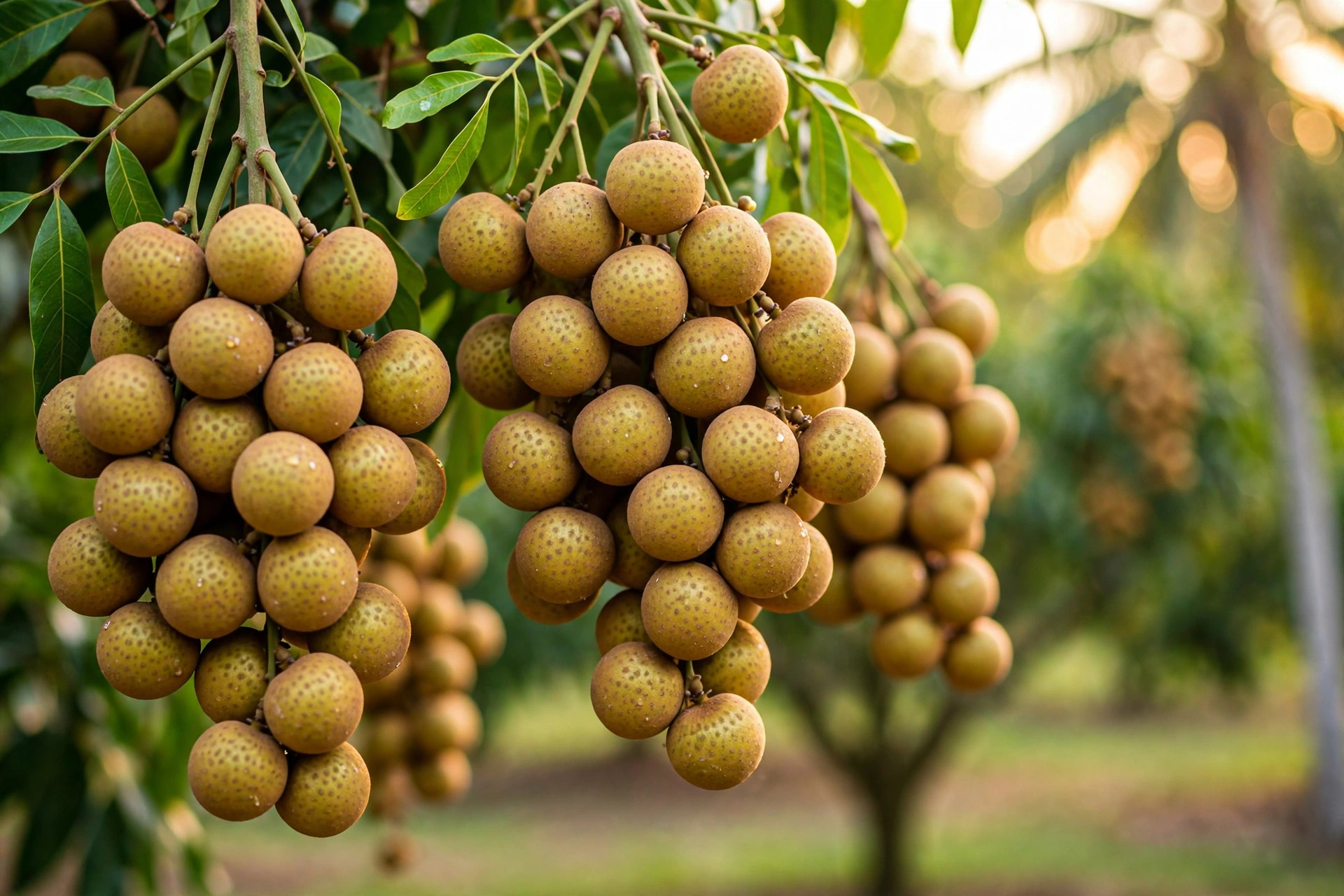
“Sweet, crisp, and juicy. Handles the heat well and crops reliably.”
Background
Reported by nursery sources (via California nurseryman Roger Meyer) to have been released from the USDA Chico Research Station; this origin claim could not be independently verified in this research, and background detail on Sugar Cane is otherwise thin. It is one of the classic sweet-fleshed American selections.
Distinguishing traits
Small to medium round-to-elongated fruit that is extremely sweet even when fresh, with a crisp apple-like texture. Ripens early (fall, often August-September). Very spiny plant, though one nursery notes its spines are smaller than other jujube varieties. Upright growth habit with few branches; early bearing and very productive. Needs a pollinizer for best crops (partially self-pollinating).
Desert care — zone 9b
- Chill hours
- Sources vary: 150 (Fanick, Bob Wells), 200 (Four Winds Growers), 400 (Raintree Nursery)
- Cold hardiness
- Hardy to about -20°F (USDA zones 5-10)
- Heat tolerance
- Requires long, hot summers to ripen; described as good in hot desert regions; withstands over 100°F
- Water
- Drought tolerant once established, but better crop with regular water; regular water during establishment
- Soil
- Prefers sandy, well-drained soils; does poorly in heavy, poorly drained soil
- Sun exposure
- Full sun
Where to buy
- Raintree Nursery
- Four Winds Growers
- Bob Wells Nursery
- Fanick Nursery