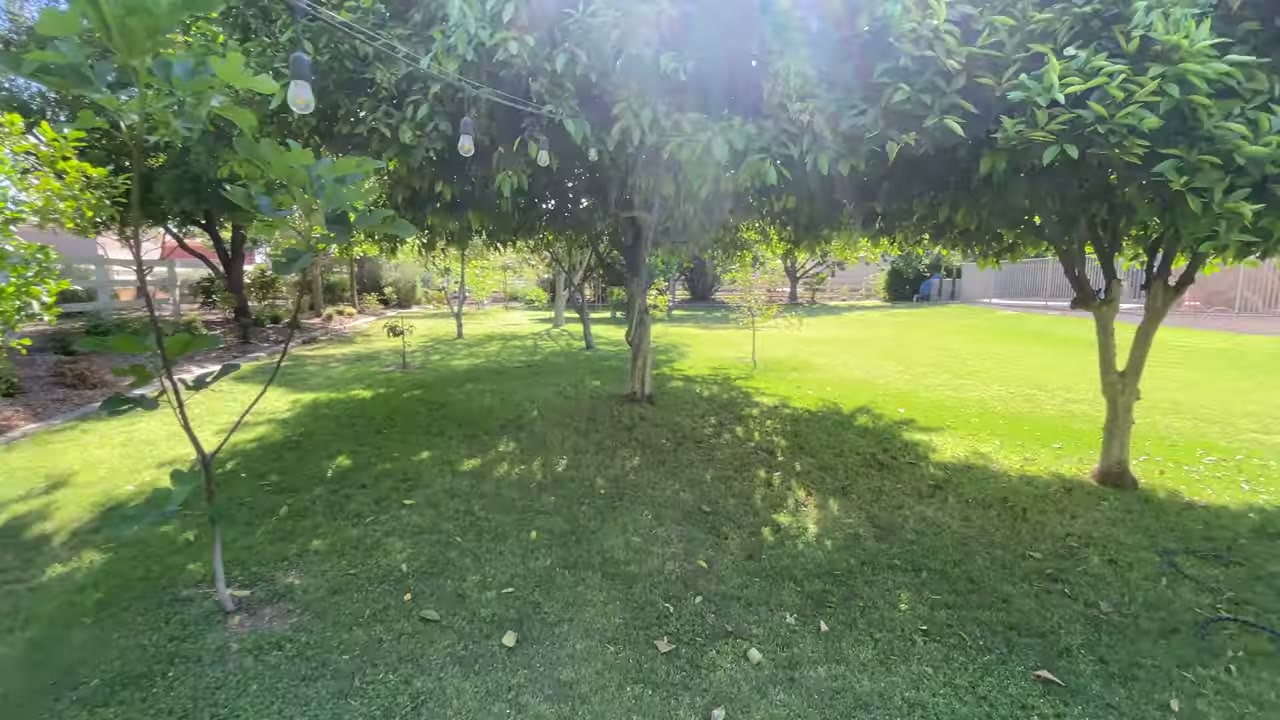
“'A very rare tree... from an Etsy grower. This past winter the top half died.' Still fighting.”
Background
Thin info, marked provisional: the white-flowered 'silk floss' in the nursery trade is often Chorisia insignis (syn. Ceiba insignis), a separate creamy-white-flowered species, but white-flowered selections of C. speciosa also circulate (UF/IFAS lists white/cream among speciosa flower colors). Matt's tree was sold as Ceiba speciosa by an unidentified Etsy grower; exact identity and cultivar are unconfirmed. Genus background matches the pink form: South American subtropical forests, formerly Chorisia. The UA arboretum notes the species name 'speciosa' means showy, and it is now widely grown across the southern US.
Distinguishing traits
Same bottle-trunk, prickled habit as the pink form, with creamy-white rather than pink fall flowers. Matt's specimen suffered top dieback in winter, which is consistent with young-tree frost sensitivity in this genus. The UA arboretum describes silk floss as a deciduous tree of 30-60 feet with a spine-covered trunk, dropping its leaves before a showy display of pink lily-like fall flowers.
Desert care — zone 9b
- Chill hours
- n/a — ornamental
- Cold hardiness
- Zones 9-11; treat as more frost-tender than the pink form until proven otherwise. Young trees need frost protection — Matt's winter top-kill is typical for an unprotected sapling. The UA arboretum notes it is cold sensitive, with damage starting around 27°F.
- Heat tolerance
- Loves full desert sun and heat once established.
- Water
- Moderate; deep water during establishment; drought tolerant once established. Avoid waterlogging. The UA arboretum rates water use as moderate: somewhat drought tolerant but needing substantial summer water.
- Soil
- Well-drained; adaptable.
- Sun exposure
- Full sun.