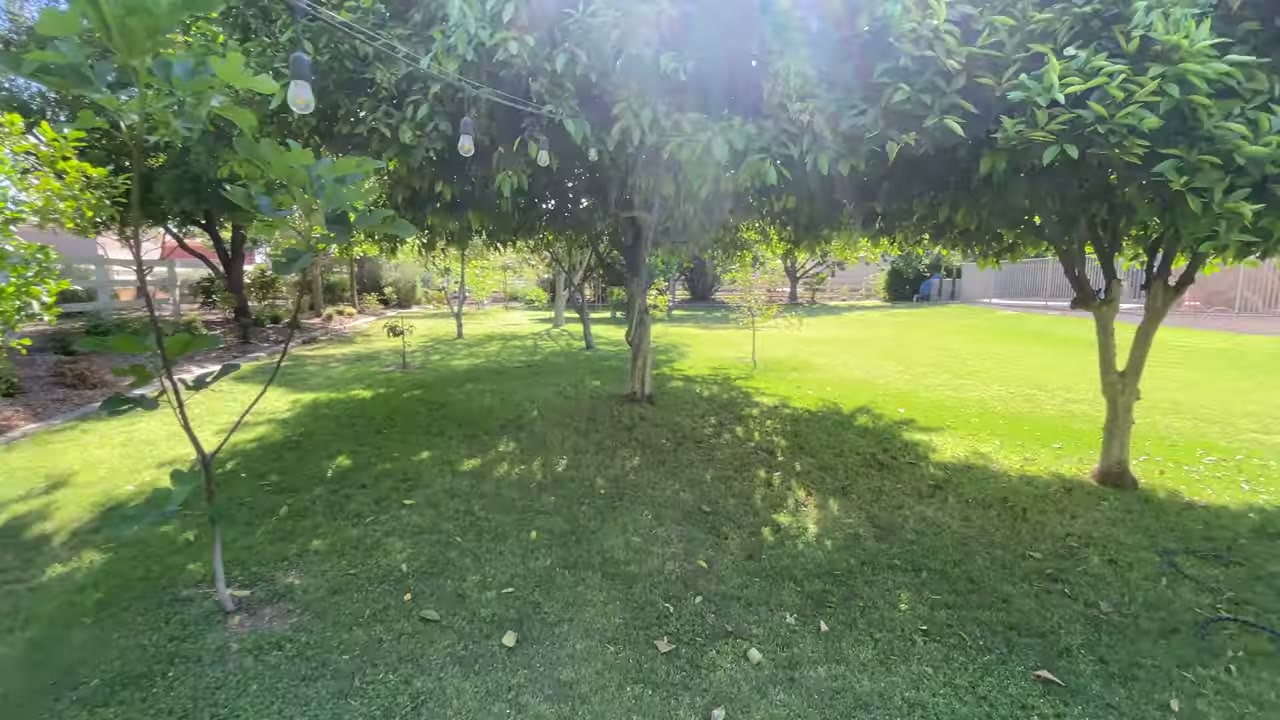
“About four years old and already 30 ft — 'my blooms are pink.' One of the fastest growers in the yard.”
Background
Ceiba speciosa (formerly Chorisia speciosa) is native to the subtropical forests of South America: northeast Argentina, eastern Bolivia, Paraguay, Uruguay, and southern Brazil. It sits in the same subfamily as baobabs and kapoks. Long planted as a street and park tree across warm regions worldwide, it is a classic 'uncommon flowering tree for the Southwest' per Fine Gardening. The UA arboretum notes the species name 'speciosa' means showy, and it is now widely grown across the southern US.
Distinguishing traits
Fast-growing deciduous tree to 30-50+ ft with a bottle-shaped trunk studded with large conical prickles (green and photosynthetic when young, gray with age). Palmately compound leaves; huge hibiscus-like pink flowers with cream centers, 4-6 in across, blooming in fall (October in Arizona) after leaf drop. Silky floss-filled pods follow the flowers. The UA arboretum describes silk floss as a deciduous tree of 30-60 feet with a spine-covered trunk, dropping its leaves before a showy display of pink lily-like fall flowers.
Desert care — zone 9b
- Chill hours
- n/a — ornamental
- Cold hardiness
- Zones 9-11; mature trees tolerate brief dips to about 20°F, but saplings are frost-sensitive. Leaves drop below about 27°F. The UA arboretum notes it is cold sensitive, with damage starting around 27°F.
- Heat tolerance
- Loves full desert sun and heat; grows in fast spurts when water is abundant, matching Matt's 30 ft at 4 years.
- Water
- Moderate; deep water during establishment and in hot dry spells; drought tolerant once established. Do not overwater. The UA arboretum rates water use as moderate: somewhat drought tolerant but needing substantial summer water.
- Soil
- Well-drained loam to sand; tolerates clay if drained.
- Sun exposure
- Full sun for best flowering.
Where to buy
- Aloha Tropicals
- Gardino Nursery (Loxahatchee Groves, FL)