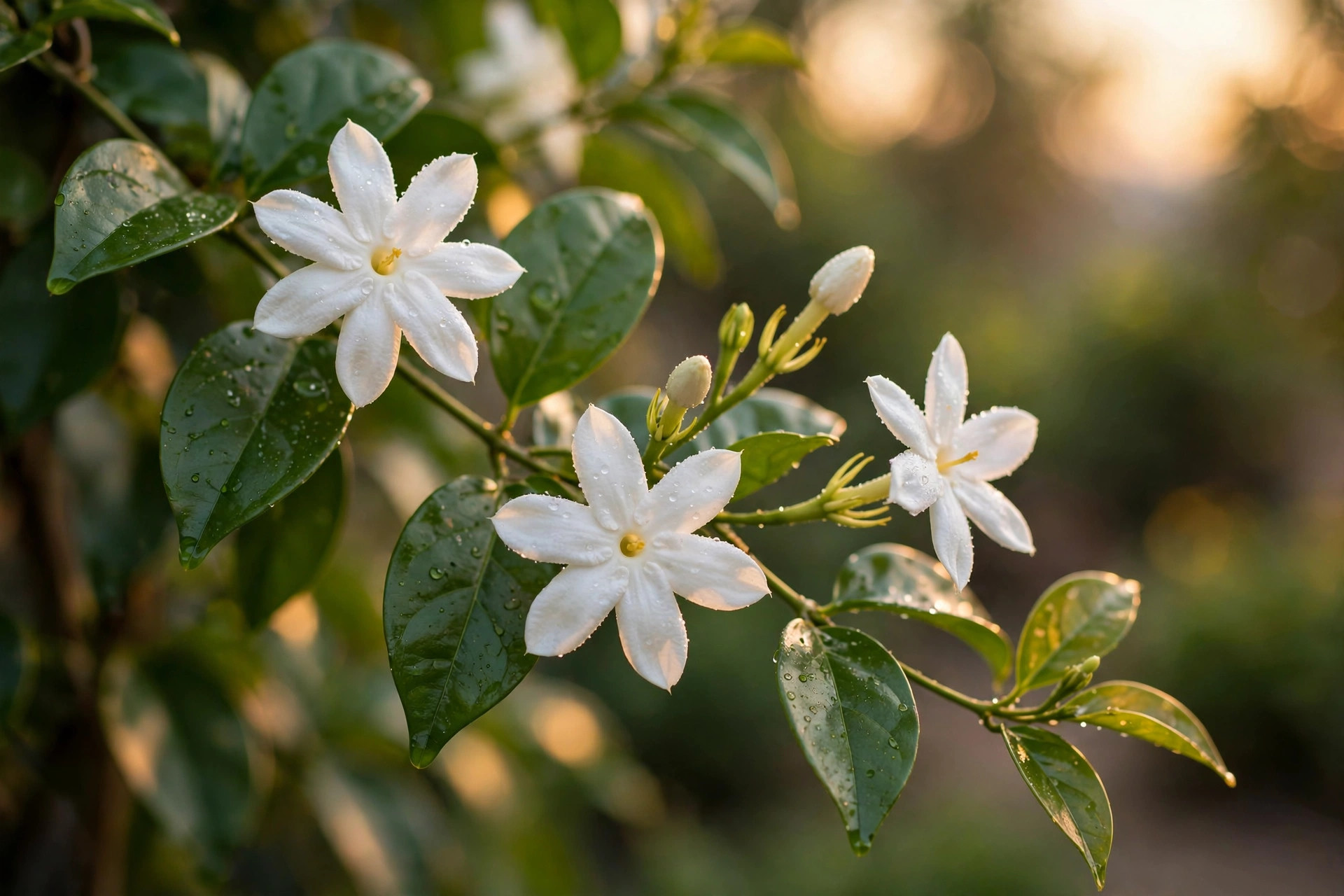
“Evergreen vine with sweet spring fragrance. Tough and reliable on the pergola and fence line.”
Background
Not a true jasmine — a member of the dogbane family (Apocynaceae) native to China, Japan, Korea, and Vietnam. Long called Confederate jasmine/jessamine in the American South, where it has been a staple evergreen vine since the 19th century. Long used in perfumes and incense in Asia.
Distinguishing traits
Vigorous evergreen twining vine or sprawling shrub reaching 10-20 ft, with glossy oval dark-green leaves that turn bronze-red in cold weather. In mid-spring (and sporadically after), it covers itself in abundant clusters of 1-in star-shaped white flowers with an intensely sweet, classic jasmine perfume. Can be trained as a vine, hedge, or groundcover. The UA arboretum describes star jasmine as an evergreen vine reaching 10-20 feet on a trellis, with lustrous dark green leaves and strongly sweet-fragrant creamy-white spring flowers.
Desert care — zone 9b
- Chill hours
- n/a — ornamental
- Cold hardiness
- Zones 7a-10b (hardy to ~15-20°F); completely hardy in 9b. The UA arboretum lists hardiness to USDA zone 8.
- Heat tolerance
- Very heat tolerant and drought tolerant once established; proven tough in desert plantings. Rich color and longer flowering with some protection from the hottest afternoon sun.
- Water
- Moderate; average water needs. Deep weekly watering in summer; drought tolerant once established. The UA arboretum rates water use as moderate.
- Soil
- Adaptable to clay, loam, or sand; prefers loamy, well-drained soil. The UA arboretum notes it prefers well-draining soil and that alkaline desert-Southwest soils can induce iron chlorosis.
- Sun exposure
- Full sun to partial shade; prune yearly to keep the vine in bounds.
Where to buy
- SiteOne
- Planting Justice