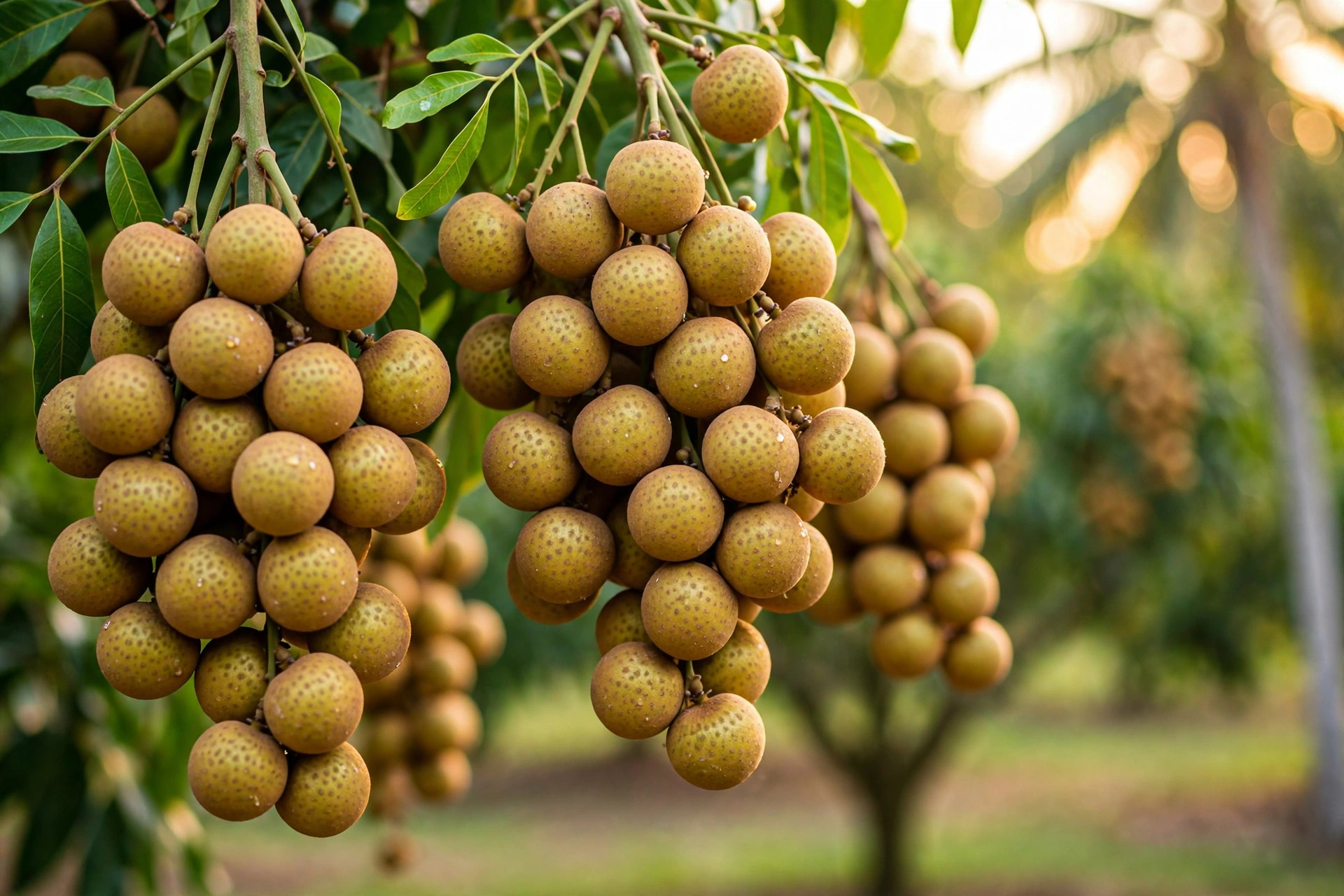
“Planted in the greenhouse zone that spring. True tropical test.”
Background
Soursop (also called guanabana or graviola) is native to the tropical Americas (Caribbean, Central and South America) and is a small evergreen tree prized for its large spiky green fruit with sweet-tart aromatic pulp used for juice, ice cream, and fresh eating. It is one of the most widely cultivated Annona species worldwide but remains strictly tropical with no cold tolerance. The UA arboretum notes soursop is native to the American tropics and was described by Linnaeus in 1753.
Distinguishing traits
Large oval spiky green fruit (up to several pounds) with soft white aromatic pulp and black seeds; glossy dark green foliage and yellow funnel-shaped flowers. Self-fertile; fast-growing, can fruit in 2-5 years from a good start. The UA arboretum describes soursop as a low-growing tree with leathery, pungent leaves and yellow-green flowers borne directly on the trunk and branches.
Desert care — zone 9b
- Chill hours
- None; needs constant warmth.
- Cold hardiness
- Strictly tropical: damage begins below 50°F and frost is fatal; best above 40°F at all times. Greenhouse or indoor winter protection is mandatory in zone 9b. The UA arboretum rates it very frost tender (USDA 10b-11), with damage at 30°F and death at 26°F.
- Heat tolerance
- Loves heat and humidity (optimal 75-84°F); in Phoenix's dry heat it needs shade cloth, high humidity around the plant, and protection from scorching afternoon sun.
- Water
- Consistent moisture; keep soil moist but not waterlogged; reduce watering in winter dormancy. The UA arboretum rates water use as moderate, noting it is very drought tolerant once established but drops leaves in prolonged dryness.
- Soil
- Rich, well-drained sandy loam, slightly acidic to neutral (pH 5.5-7.0).
- Sun exposure
- Full sun to part shade; in extreme desert heat, afternoon shade is beneficial.
Where to buy
- Sow Exotic