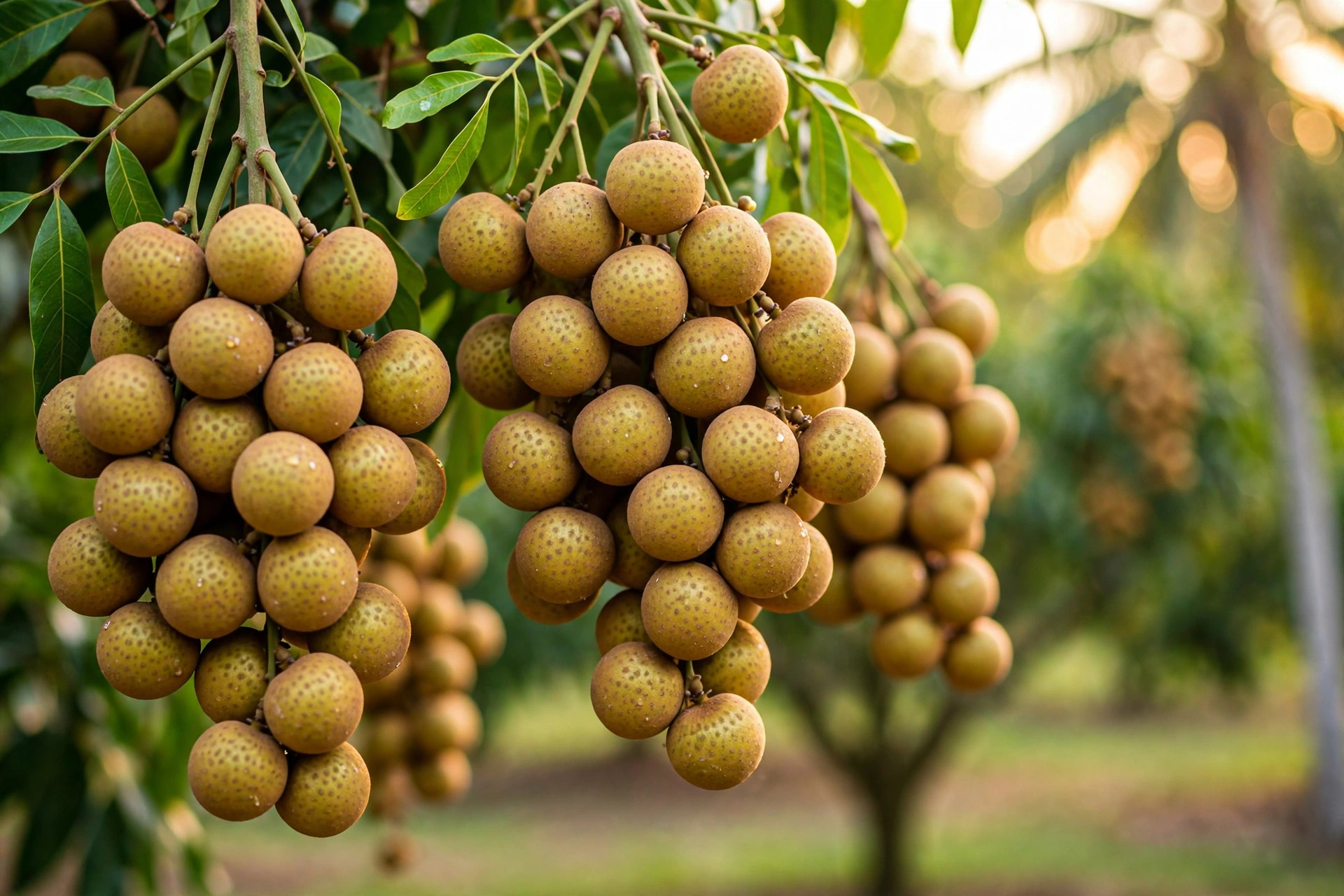
“Survived an unprotected winter. Cultivar unspecified — still proving itself.”
Background
Cherimoya is native to the inter-Andean valleys of Ecuador, Colombia, and Peru, and is considered one of the finest-flavored fruits in the world (Mark Twain reportedly called it the most delicious fruit known to man). Seeds from Mexico were first planted in California at Carpinteria in 1871, and commercial production developed in coastal southern California. Cultivar unconfirmed for Matt's tree.
Distinguishing traits
Heart-shaped green fruit 8-15 cm with scaly fingerprint-like skin and creamy white custard-like pulp flavored like banana, pineapple, peach, and strawberry; 20-40 large brown seeds per fruit. Small semi-deciduous tree with large velvety leaves; flowers usually need hand pollination for good fruit set.
Desert care — zone 9b
- Chill hours
- Needs roughly 50-100 hours of mild chilling for normal foliation and productivity; gets this easily in Phoenix winters.
- Cold hardiness
- Young growing tips killed at 29°F; mature trees killed or severely injured at 25°F. Marginal in zone 9b; plant in a warm, wind-sheltered microclimate. Note: Matt's tree survived an unprotected winter.
- Heat tolerance
- Poor. CRFG/UC guidance states cherimoya is resentful of excessive dry interior heat and is not recommended for the desert; above about 90°F growth and fruit quality suffer. Afternoon shade, deep mulching, and regular water are essential in Phoenix.
- Water
- More water in warm dry weather and during fruit set; never let the root zone dry completely.
- Soil
- Well-drained soil, pH 6.5-7.6; dislikes waterlogging.
- Sun exposure
- Full sun to half shade; afternoon shade strongly recommended in desert.