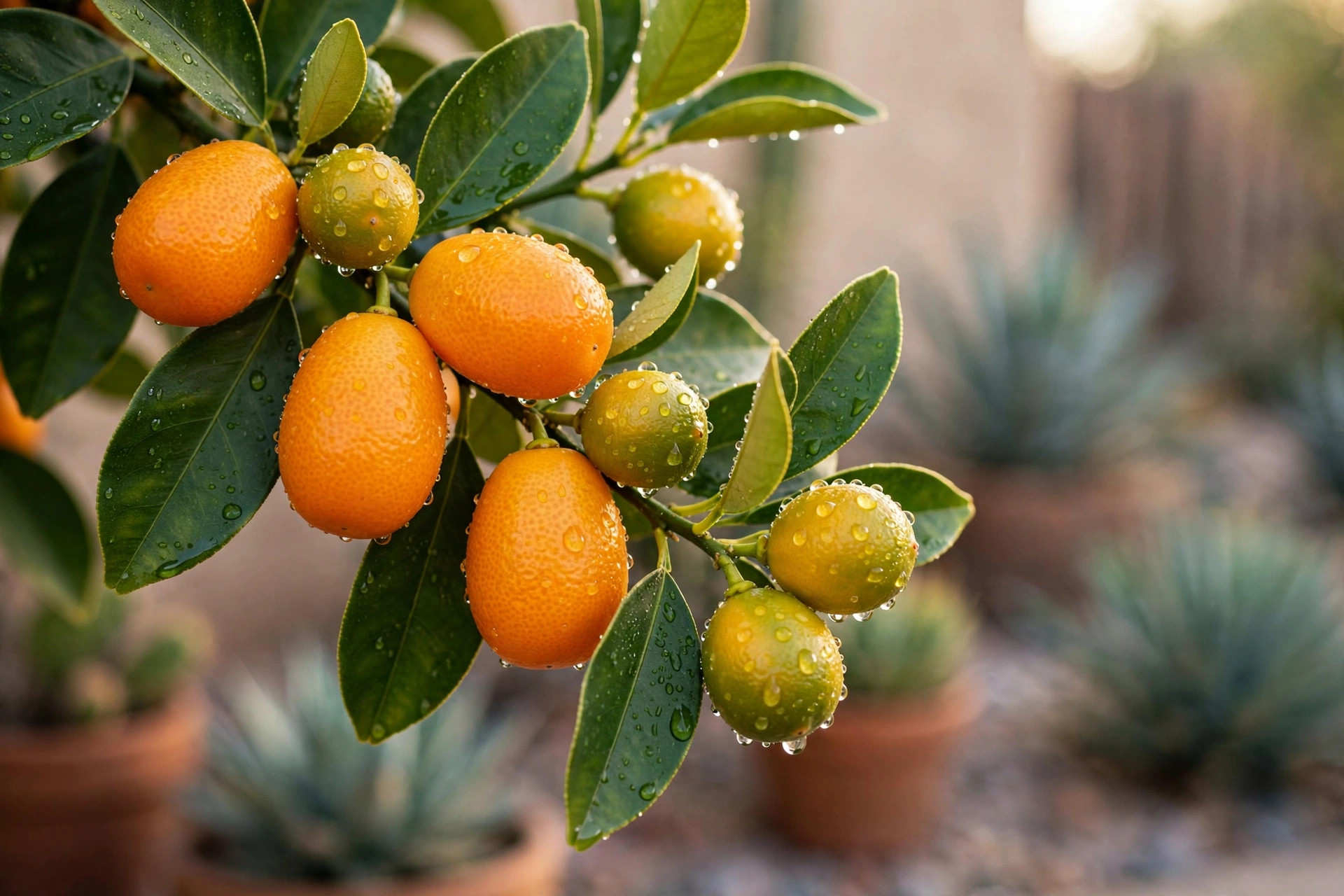
“The classic tart kumquat — for marmalade and the brave.”
Background
'Nagami' is the classic oval kumquat, native to China and long cultivated in Japan; the most widely grown kumquat in the world and the standard grocery-store type. Introduced to the US in the late 19th century via Japanese collections (like the Meiwa, a possible Fortunella hybrid). Its tart flesh/sweet rind contrast made it the traditional kumquat of marmalades and preserves. The UA arboretum notes kumquat originated in China and reached Europe and North America in the 1800s.
Distinguishing traits
Small-to-medium dense evergreen tree with fine-textured, glossy dark green foliage. Fruit oval/oblong (~1.4 in), bright orange; sweet, aromatic rind with tart, acidic pulp and 5-6 seeds — the classic sweet-tart contrast, eaten whole. Semi-dormant fall-to-spring habit aids cold tolerance; susceptible to zinc deficiency (small leaves, short internodes) in alkaline soils. Flowers summer; fruit matures late winter and holds on the tree. The UA arboretum describes kumquat as a small shrubby tree of 8-15 feet with glossy dark green leaves, sweetly fragrant white flowers, and small golden fruit with a thick sweet peel.
Desert care — zone 9b
- Chill hours
- Very low.
- Cold hardiness
- Among the hardiest citrus; established trees to ~18-20°F (zone 8a). The UA arboretum notes kumquat needs heat of 80-100°F to thrive but tolerates 10-15°F of frost without damage.
- Heat tolerance
- Handles full desert heat once established; give young trees afternoon shade the first summer.
- Water
- Moderate; deep watering 1x/week in summer; do not let pot/soil stay soggy.
- Soil
- Well-drained, slightly acidic to neutral; watch for zinc/iron chlorosis in alkaline desert soil — use chelated micronutrients.
- Sun exposure
- Full sun to partial shade.