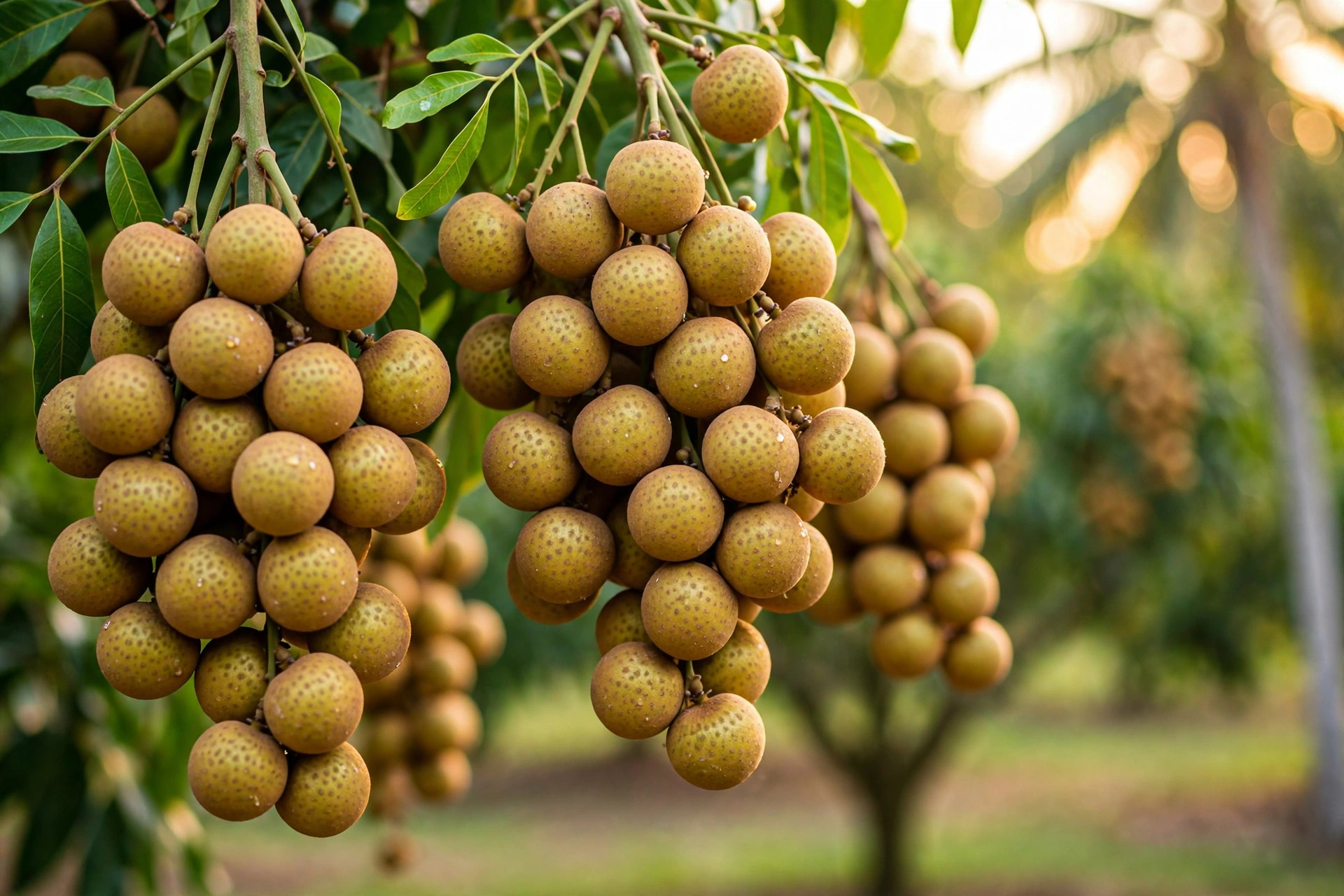
“The worst of the six avocados in the yard — cut back and never recovered. Honest data point.”
Background
Grown from a seed bought in 1926 by Rudolph Hass of La Habra Heights, California; the seedling was patented in 1935. A 2019 genetic study found Hass is roughly 61% Mexican and 39% Guatemalan. All commercial Hass trees are grafted clones of that single tree, which died in 2002. It accounts for over 80% of the U.S. avocado crop. The UA arboretum notes avocado has been a dietary staple for over 9,000 years, cultivated since around 8000 BCE, with its name from the Nahuatl 'ahuacatl.'
Distinguishing traits
Medium, pear-to-ovoid fruit with thick pebbly skin that turns dark purple-black when ripe; creamy, nutty flesh with high oil content. Type A flowers. Vigorous spreading tree; year-round production pattern; tends to bear heavily every other year. The most frost-tender of the common cultivars. The UA arboretum describes avocado as a low-branching evergreen tree with leathery, anise-scented leaves and large clusters of greenish-yellow winter flowers.
Desert care — zone 9b
- Chill hours
- Low requirement; not limiting in the desert.
- Cold hardiness
- Very frost-tender; damaged by temperatures much below 30°F, making it the least cold-hardy of Matt's six avocados. Requires the warmest microclimate and frost protection in Queen Creek. The UA arboretum gives USDA zones 9a-10b (20-35°F), noting frost tolerance varies by race: Mexican types to 20°F, Guatemalan to 28°F, West Indian to 32°F.
- Heat tolerance
- Tolerates heat but suffers leaf and fruit sunburn in extreme desert sun; young trees need trunk protection and afternoon shade.
- Water
- Deep regular irrigation; very sensitive to salts common in Arizona water and soil, so periodic leaching is important. The UA arboretum rates water use as moderate and recommends well-draining, aerated, high-organic soil around pH 5-5.8.
- Soil
- Well-drained soil, slightly acidic to neutral; plant on a mound in heavy clay or caliche.
- Sun exposure
- Full sun to partial shade; in the desert, some afternoon protection helps young trees. Wind-sheltered location preferred.
Where to buy
- Home Depot, Lowe's (commonly stocked retail item; not individually verified in this research)