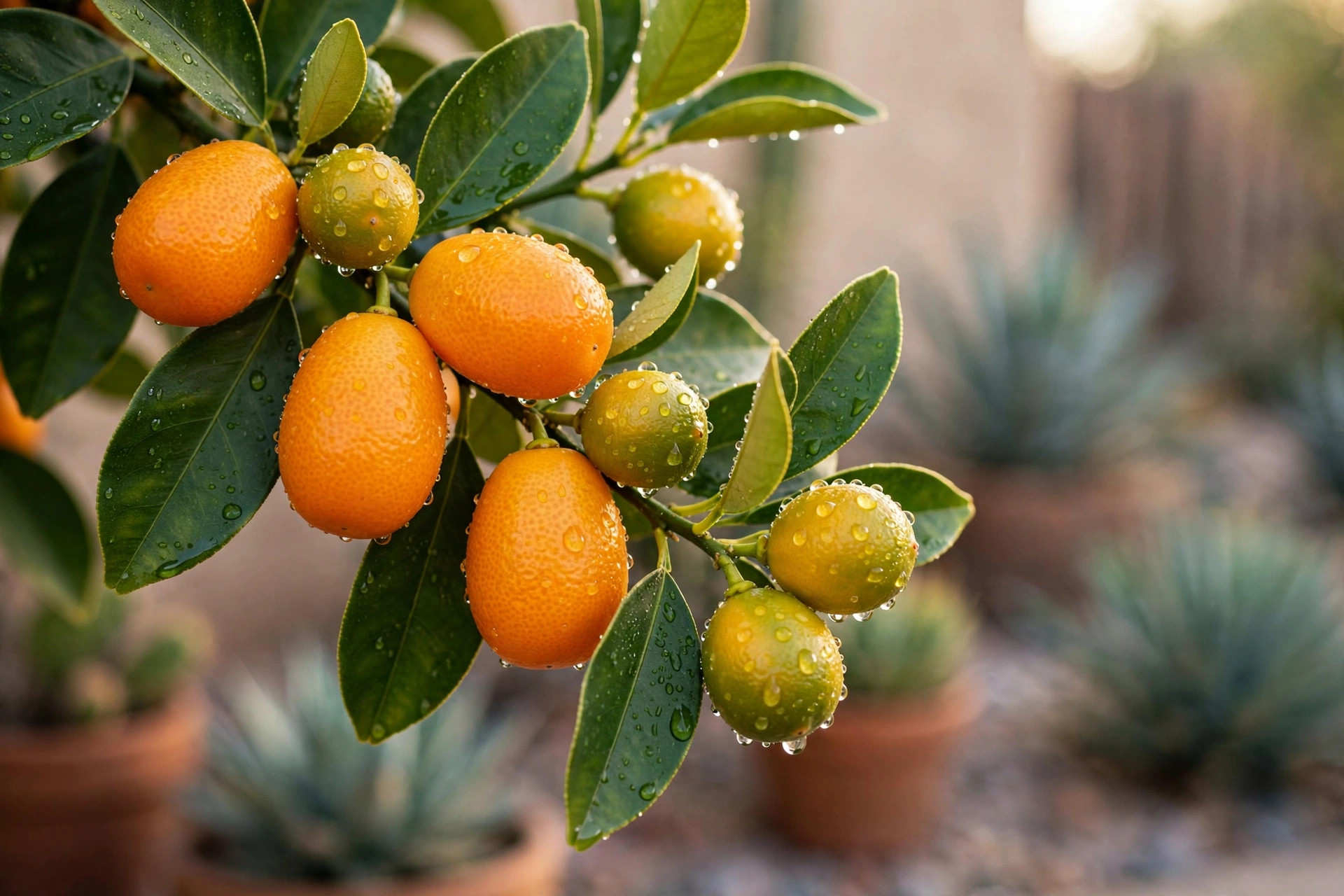
“Border citrus doing well. Cultivar unspecified.”
Background
Blood oranges are sweet-orange (Citrus × sinensis) bud sports first documented in Sicily in the 17th century; the three main commercial cultivars are 'Moro' (Sicily), 'Tarocco' (Italy), and 'Sanguinello/Sanguinelli' (Spain), plus others like 'Ruby' and 'Salustiana'. The crimson flesh comes from anthocyanins (cyanidin-3-glucoside), which only accumulate with cool night temperatures during ripening. Cultivar unspecified on Matt's tree. The UA arboretum traces sweet orange origins to Southeast Asia; it is now grown in tropical regions worldwide.
Distinguishing traits
Medium oranges with crimson to deep-red flesh (and sometimes red-blushed rind); distinctive raspberry/berry-like flavor notes in addition to classic orange sweetness. 'Moro' is the deepest-colored and most common US commercial type; 'Tarocco' is larger and sweeter with lighter color; 'Sanguinelli' is smaller, oval, few seeds. KEY DESERT CAVEAT (UA Extension): in Arizona's warm climate many blood oranges fail to develop the typical deep red internal color; 'Salustiana' is the most consistent colorer in the Salt River Valley. The UA arboretum describes the sweet orange as a broadleaf evergreen tree of 20-30 feet with white flower clusters and round sweet fruit.
Desert care — zone 9b
- Chill hours
- Low (~100 hours below 45°F); cool nights actually improve color rather than chill requirement.
- Cold hardiness
- ~28°F for mature trees; standard sweet-orange hardiness. The UA arboretum calls it frost tender and advises planting for early-morning sun.
- Heat tolerance
- Takes desert heat; warm nights reduce red coloration — expect paler fruit than Sicilian-grown; quality and sweetness remain good.
- Water
- Deep watering 1-2x/week summer; consistent moisture January-March harvest window.
- Soil
- Well-drained, pH 6.0-7.5.
- Sun exposure
- Full sun.