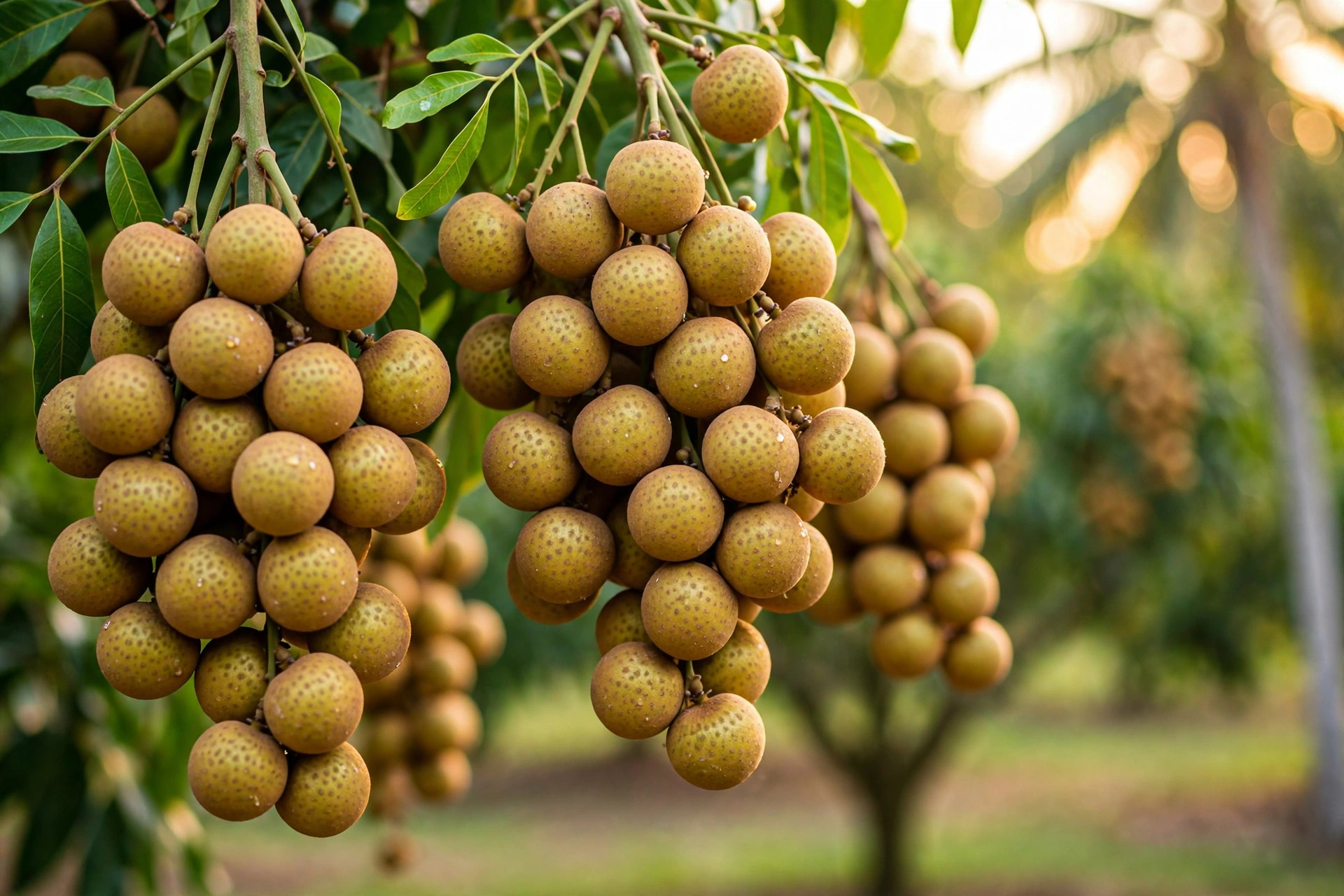
“New for 2026 and one of the most experimental plantings in the yard. Yangmei dislikes heat, so this is a true trial — a male pollinizer is still on the wishlist.”
Background
Yangmei (Chinese bayberry / yumberry) has been cultivated in China for at least 2,000 years, with ~300 recorded landraces and major production in Zhejiang province. 'Wuzi' (also transliterated 'Wusu', as in the 2010s California importation of Dongkui, Ding'ao, and Wusu trees) is a large-fruited female selection; a phytochemical survey of 17 cultivars (MDPI, 2015) found Wuzi had the largest fruit at 28.17 g, over 3x the smallest cultivar. Modern Chinese breeding is dominated by elite-line selection (Biqi, Dongkui); Wuzi is a mid-season red-fruited type.
Distinguishing traits
Evergreen subtropical tree (to 15 m in nature), dense dark-green leathery foliage, nitrogen-fixing Frankia root association, tolerates poor soils. Fruit is a dark red to purple-red papillose drupe ~1-1.5 in diameter on cultivated trees; Wuzi is notably large (up to ~28 g). Female flowers are inconspicuous; dioecious species, wind-pollinated, with male trees planted for pollination. Flavor is sweet-tart, raspberry/cherry/pineapple-like.
Desert care — zone 9b
- Chill hours
- Requires some chill to set fruit; exact hours unverified (thin data). Not suited to frost-free tropical climates (reportedly not grown in Hawaii for lack of chill).
- Cold hardiness
- Zones 8-10; reported tolerant to ~16°F.
- Heat tolerance
- THIN DATA for extreme heat: documented as disliking prolonged high heat; native range is humid subtropical. Survival above ~105°F is not well documented — Matt's 85142 planting is a genuine experiment. Site in the coolest, most wind-sheltered spot; afternoon shade recommended in desert summers.
- Water
- Medium; regular deep watering, must never sit waterlogged. Mulch heavily but keep mulch off trunk. More water than native citrus would get; drought stress plus heat is the main risk.
- Soil
- Prefers acidic soil (pH 4.5-6); tolerates poor sandy/loam soils thanks to nitrogen fixation. AZ alkaline/caliche soil is a real obstacle — plant in amended, acidic-leaning backfill and top-dress with acid mulch (pine bark, sulfur as needed).
- Sun exposure
- Full sun to partial shade; in Queen Creek give afternoon shade the first 2-3 summers and protect young foliage from intense UV.