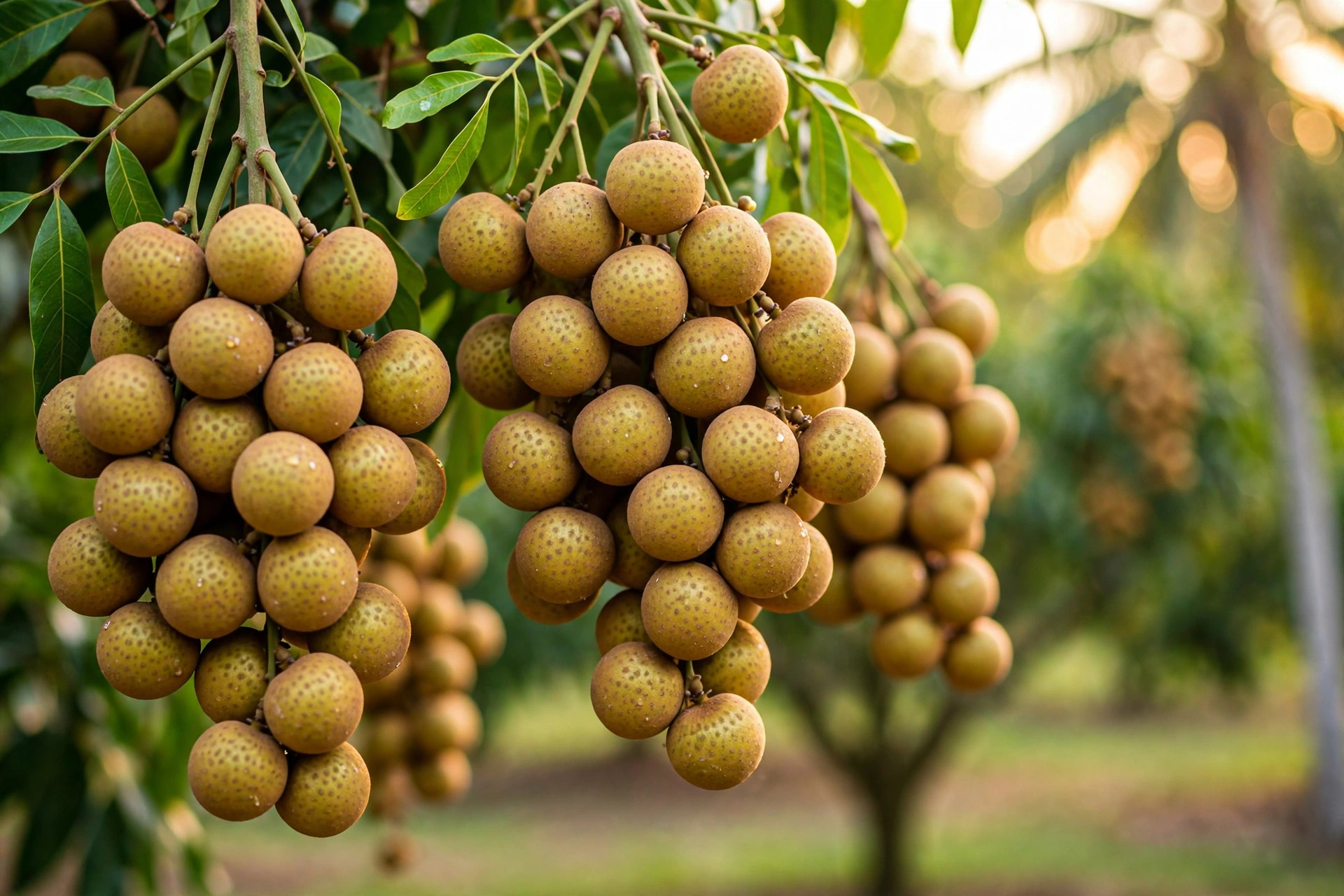
White Sapote 'Suebelle'
Casimiroa edulis
“Heavy-bearing white sapote — a reliable producer in the yard.”
Background
Suebelle is a California-bred white sapote selection and one of the best-known backyard cultivars in the US. It was selected for precocity, heavy bearing, and reliable production, and is fairly widely planted in California home gardens. It is self-fertile but sets heavier crops when another white sapote is nearby. The UA arboretum places its origin in central Mexico.
Distinguishing traits
Small, usually asymmetrical yellow-green fruit of variable size with very sweet creamy-white pulp (reported around 22% sugar) and excellent, non-bitter flavor. Medium to small, compact tree habit suited to home gardens; fruits nearly year-round in suitable climates. The UA arboretum describes white sapote as a rapid grower with palmately compound leaves, new growth reddish, and tiny clustered greenish-yellow winter flowers.
Desert care — zone 9b
- Chill hours
- None required; benefits from a cool or dry rest period that triggers flowering.
- Cold hardiness
- Young trees damaged or killed at 24°F and below; mature trees damaged or killed at 26°F and below (UF/IFAS). In zone 9b, plant in the warmest microclimate with winter frost protection. The UA arboretum advises protecting it below 30°F.
- Heat tolerance
- Tolerates desert heat reasonably once established, but fruit set and young foliage appreciate afternoon shade and regular water in 110°F+ heat.
- Water
- New trees water every other day for the first week, then 1-2 times per week; established trees need supplemental water only in prolonged dry spells. Avoid overwatering; mature trees dislike soggy soil. The UA arboretum rates water use as moderate, recommending deep watering every one to two weeks once established and exceptionally well-drained soil.
- Soil
- Adaptable to most well-drained soils including sand, clay, and limestone; pH 5.5-7.5. Do not plant where water stands after summer rains.
- Sun exposure
- Full sun for best growth and production. The UA arboretum recommends a southern exposure for winter warmth with afternoon shade, noting young trees are stressed by high heat in their first three years.
Where to buy
- Planting Justice
- GardenNursery.net