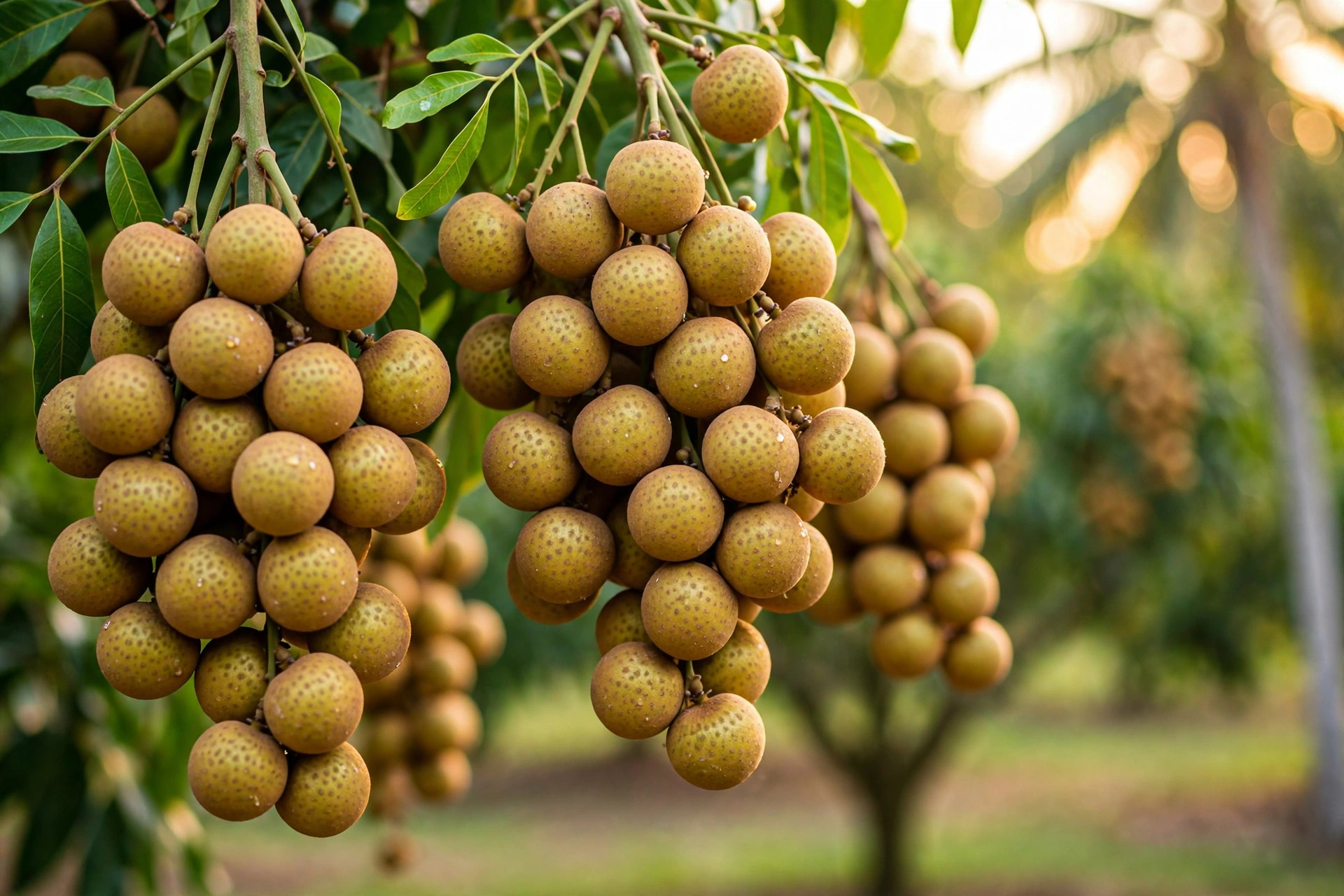
Taiwan Tiger Jaboticaba
Plinia cauliflora (label per assignment; trade sources treat it as Plinia sp., likely P. phitrantha or a phitrantha-dominant hybrid)
“Newer addition — 'of all the jaboticaba I have in my yard.' Being evaluated.”
Background
A real, named variety verified in the trade, though its taxonomy is unsettled: it is likely Plinia phitrantha (or a phitrantha-dominant hybrid), not P. cauliflora — sellers describe it as 'Plinia sp. Taiwan Tiger' of unconfirmed species. It has Brazilian roots but gained attention after introduction to Taiwan around 2021, and entered the U.S. trade (including a Hawaii-based eBay seller) around the same period. Its defining trait is the costate (ribbed) fruit. It is a genuinely new introduction with thin long-term growing data.
Distinguishing traits
Scarlet-red fruit with 5-25 light-green to bronze costate ribs that stay greenish even as the fruit ripens — the cultivar's most distinctive feature, creating a 'tiger stripe' contrast. Short juvenile period for a jaboticaba: fruits in about 4-5 years from seed. Sweet, juicy pulp of excellent quality, similar to other jaboticabas. Broad, flat, dark-green lanceolate leaves. Fruit clusters of up to 6 with a nipple-to-rostrate attachment.
Desert care — zone 9b
- Chill hours
- None required (tropical evergreen)
- Cold hardiness
- One seller lists USDA zones 9b-13; otherwise treat like other jaboticabas — protect below ~32°F, established trees briefly tolerate about 27-29°F. Limited cold data for this new introduction.
- Heat tolerance
- Tropical and heat-loving; in the desert give consistent moisture, mulch, and afternoon shade while young.
- Water
- Heavy, consistent watering; keep soil moist but not waterlogged.
- Soil
- Acidic to neutral, well-drained soil; amend alkaline desert soil.
- Sun exposure
- Partial to full sun; shade while young is safer in extreme heat.
Where to buy
- MTech Gardens