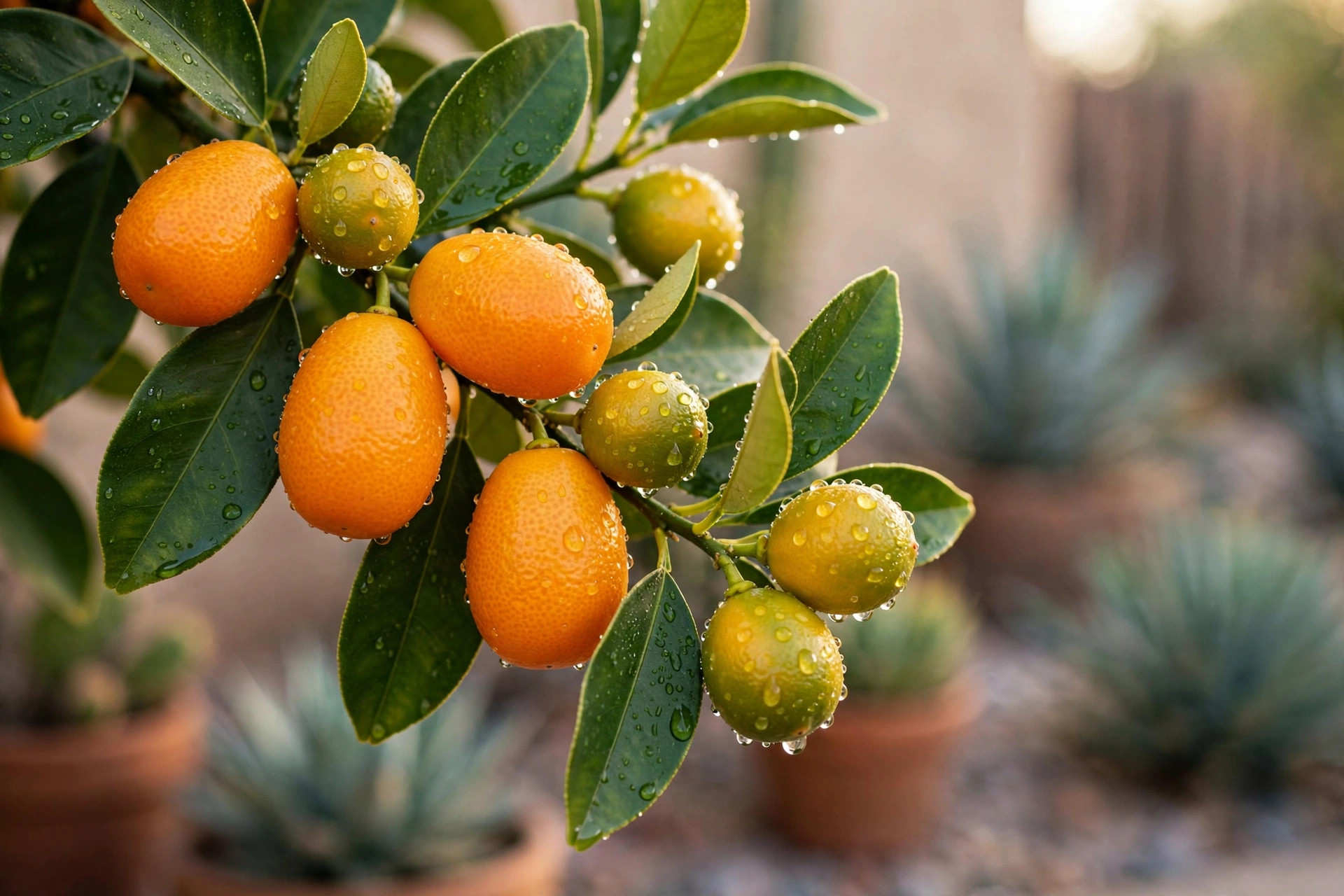
“Green-fleshed type — 'tahan' on camera resolves to Tahitian.”
Background
Origin obscure: The Citrus Industry (1967) says the so-called Tahitian grapefruit 'is believed to have developed in Tahiti from seed from Borneo whence it was taken to Hawaii'; it is of local importance in Tahiti/Hawaii but highly reputed for quality. UCR's Citrus Variety Collection holds it as CRC 3806 ('Moanalua' pummelo is treated as a synonym). Sarawak pummelo is sometimes also called 'Tahitian pummelo', a naming confusion to be aware of.
Distinguishing traits
Greenish-yellow rind, thinner than most pummelos; fruit round, slightly flattened, small to medium-large for a pummelo; seedy. Flesh greenish-amber, melting, juicy, sweet with an unusual melon-like or lime-like flavor — matches Matt's 'green-fleshed type'. Dwarf-ish trees for a pummelo; early to mid-season, holds well on the tree.
Desert care — zone 9b
- Chill hours
- Low.
- Cold hardiness
- Pummelos are the most cold-sensitive citrus; protect below ~30-32°F.
- Heat tolerance
- Standard pummelo care in the low desert: handles heat with deep watering; fruit and young bark are sunburn-prone.
- Water
- Deep, regular summer watering 1-2x/week; consistent moisture through fruit development.
- Soil
- Well-drained, pH 6.0-7.5; avoid caliche; mulch.
- Sun exposure
- Full sun; young trees benefit from afternoon shade first 1-2 summers.