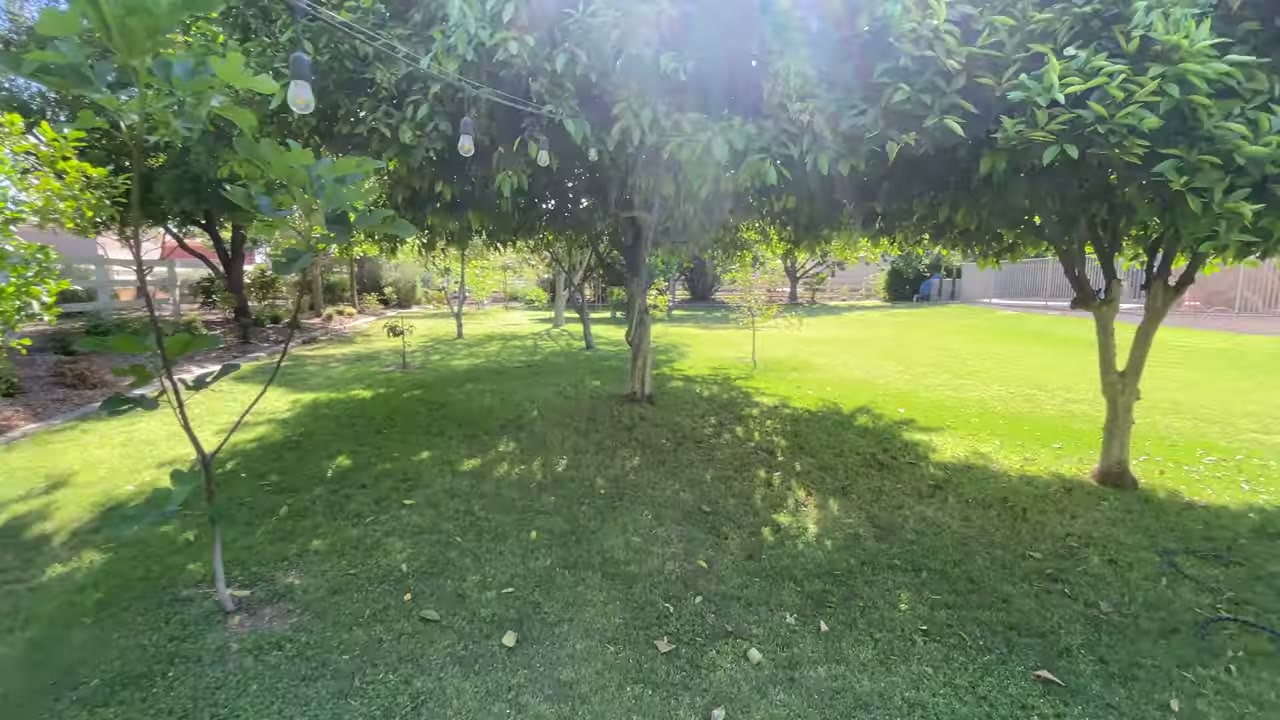
“Planted after the China trip — 'I saw it [at my father-in-law's]... I found it [in the States].' In the shaded seating area.”
Background
Osmanthus fragrans is native from the Himalayas through southern China (Guizhou, Sichuan, Yunnan) to Taiwan and southern Japan. It has been cultivated in China for about 2,500 years; the flowers (gui hua) scent teas, wines, and sweets, and the city of Guilin is named the 'forest of sweet osmanthus.' It entered Western horticulture in the late 1700s. The orange-flowered var. aurantiacus is hardier and more fragrant than the white form.
Distinguishing traits
Large evergreen shrub or small tree, 10-20 ft; glossy dark green finely-toothed leaves. Tiny (5mm) white-to-cream (or orange in aurantiacus) four-petaled flowers in fall and spring with an intense apricot-peach perfume that carries across the garden. The UA arboretum describes sweet tea olive as an evergreen tree usually to 15 feet, with glossy green leaves and small white spring flowers carrying a strong apricot-like fragrance.
Desert care — zone 9b
- Chill hours
- n/a — ornamental
- Cold hardiness
- USDA 8b-11; hardy to about 20°F, generally surviving to 10°F. Brief freezes are fine. The UA arboretum lists hardiness to 10°F.
- Heat tolerance
- Avoid afternoon sun in Phoenix; young plants need shade and tolerate sun only once mature.
- Water
- Regular water in desert heat; keep soil moist but drained. Drought tolerant only once established in milder climates. The UA arboretum rates water use as moderate, with regular watering needed though moderately drought tolerant once established.
- Soil
- Moist, well-drained; tolerates clay and alkaline soils reasonably.
- Sun exposure
- Full sun to partial shade; in Phoenix, afternoon shade is a must — Matt's shaded seating area is ideal. The UA arboretum notes full sun is tolerated but afternoon shade is best.
Where to buy
- Woodlanders