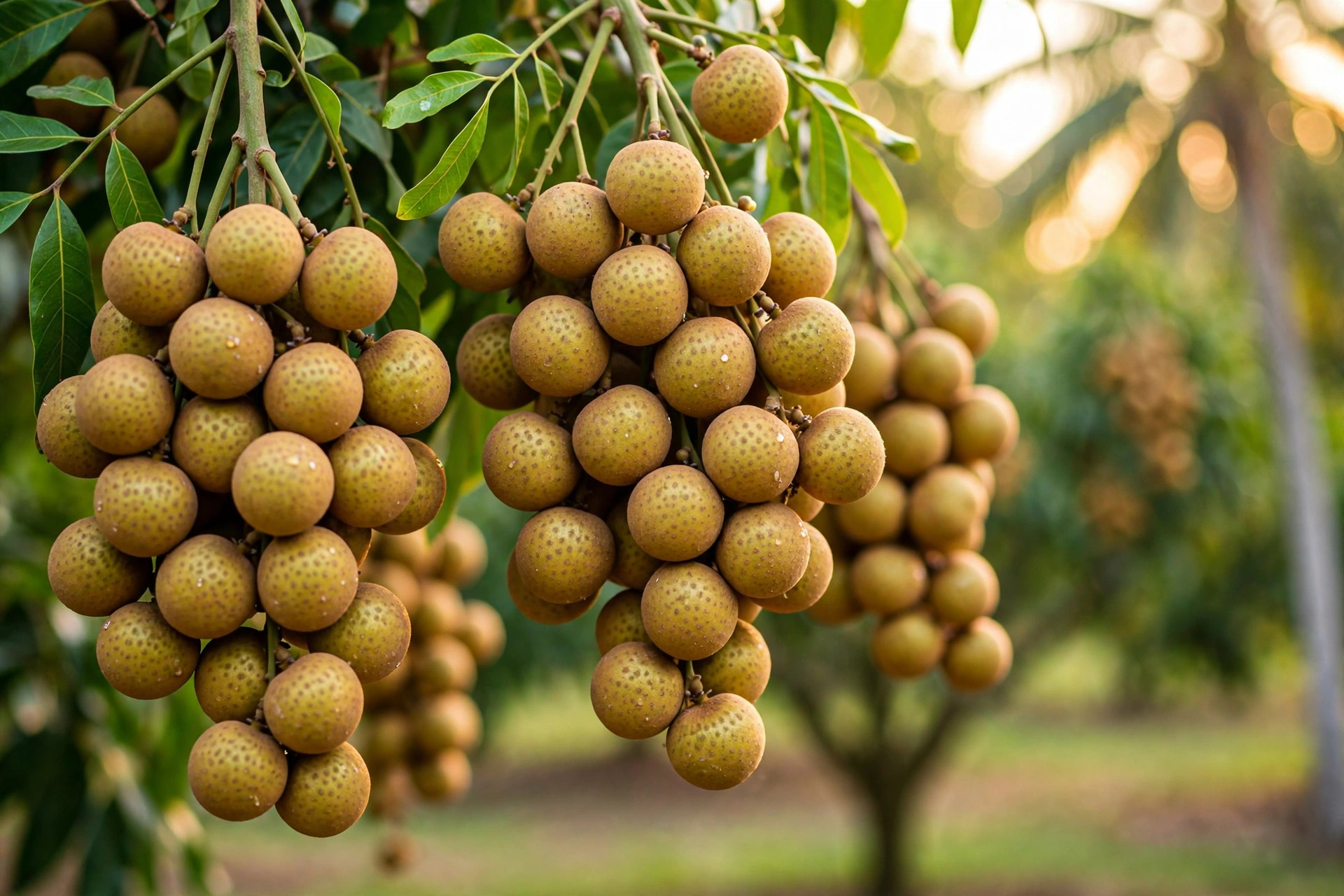
“'The most common black variety.' In the ground and fruiting.”
Background
The classic black-fruited selection of Plinia cauliflora, named for the Sabará region of Minas Gerais, Brazil — the country's biggest jaboticaba production area (per the Slow Food Ark of Taste). It is 'the most common black variety' in the trade, prized for early and heavy bearing: it begins fruiting in about 5-6 years from seed versus up to a decade for standard jaboticaba, and can produce three to four fruiting cycles per year.
Distinguishing traits
Glossy purplish-black, grape-like fruit about 1-1.5 inches in diameter, borne directly on the trunk and older branches (caulifloric) — the signature jaboticaba look. Thick, tannic skin around sweet, translucent white-to-pink pulp; flavor compared to grapes and lychees with a slight floral note. Slow-growing evergreen small tree, 10-15 ft in cultivation; salmon-pink new leaves. Matt's is already fruiting.
Desert care — zone 9b
- Chill hours
- None required (tropical evergreen)
- Cold hardiness
- Tolerates a few degrees of frost; established trees handle brief dips to about 27-29°F, young trees need protection below ~32°F. Queen Creek freezes are the main risk — sheltered microclimate and frost cloth for young trees.
- Heat tolerance
- Tropical tree that wants heat, but dry desert heat with wind is stressful: mulch heavily and keep soil consistently moist. Afternoon shade helps while young.
- Water
- Heavy, consistent water — jaboticabas demand constantly moist (never waterlogged) soil; consistent irrigation triggers bloom cycles.
- Soil
- Rich, deep, slightly acidic soil (pH 4.5-6.5); not well adapted to alkaline desert soil — use acidifying amendments, mulch, and chelated iron drenches to prevent chlorosis.
- Sun exposure
- Full sun or some shade; filtered afternoon light preferred in the desert, especially for young trees.
Where to buy
- Let's Grow Florida