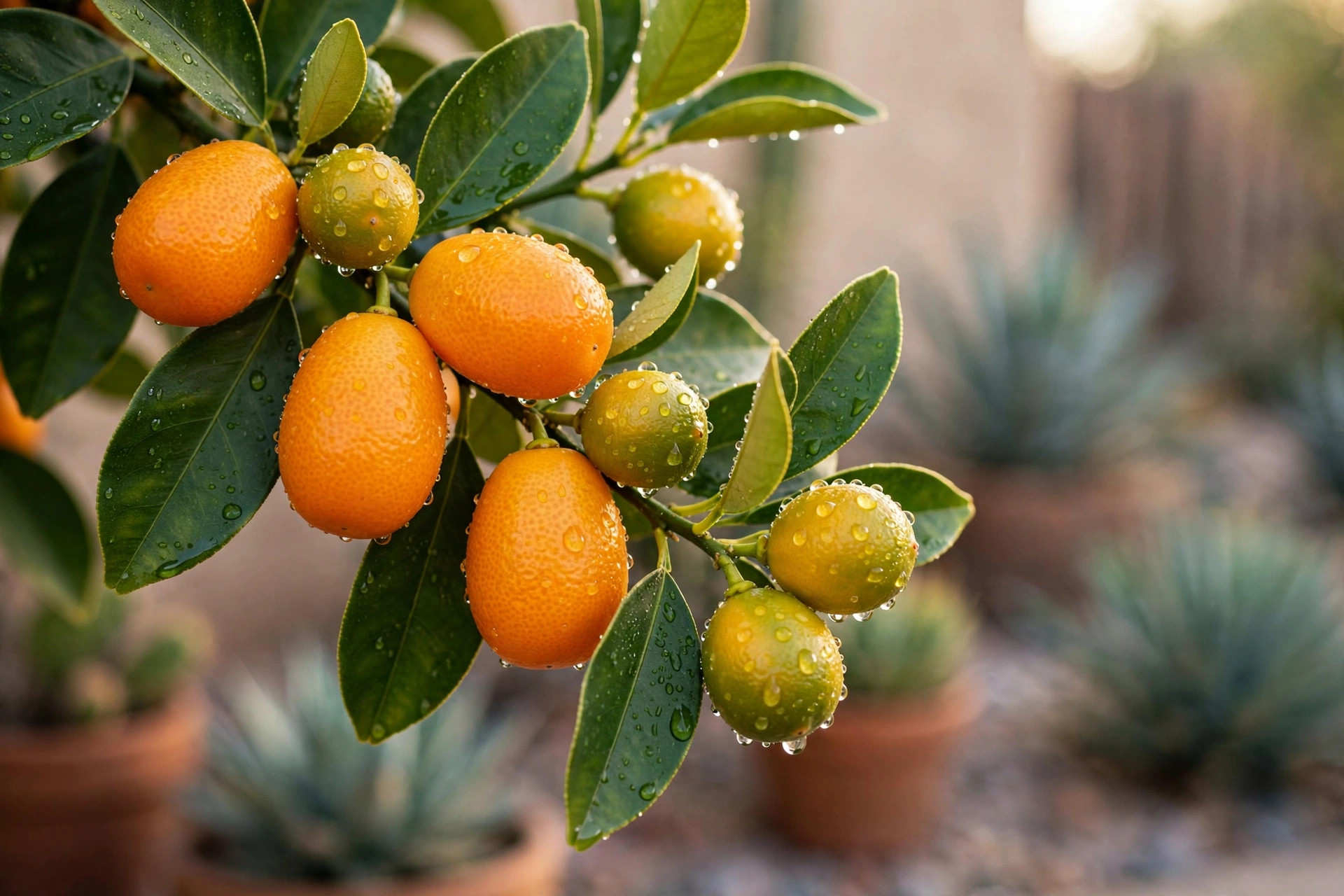
“My wife's favorite citrus — a sweet, low-acid grapefruit-pomelo cross. Thrives in the yard with minimal fuss.”
Background
Bred at UC Riverside by geneticists James W. Cameron and Robert Soost in April 1958 as a cross between an acidless pummelo and a Marsh white grapefruit (triploid hybrid); released to growers in 1980. Developed as part of the same 1950s UCR breeding effort that produced Melogold and the parents of Valentine. Struggled in US markets at first (consumers mistook the green-keeping rind for unripeness) but became popular in Israel and Asia as 'Sweetie'.
Distinguishing traits
Medium tree, vigorous to large size. Fruit oblate, grapefruit-sized with a thick rind that stays green well after maturity; nearly seedless with pale yellow-green, tender, juicy flesh. Flavor is sweet and mild with very low acidity (roughly 10-11% sugar, ~0.7% acid) and no grapefruit bitterness. Fruit holds on the tree from about November through March.
Desert care — zone 9b
- Chill hours
- Low (~100 hours below 45°F typical for grapefruit types).
- Cold hardiness
- Moderately cold-hardy citrus; damage begins ~28-30°F; needs frost protection for young trees.
- Heat tolerance
- Handles low-desert heat well (grown commercially in warm climates); requires less heat than grapefruit and matures earlier. Adequate water is essential during 110°F+ stretches.
- Water
- Deep watering 1-2x/week in summer to 2-3 ft depth; let the top dry between waterings; consistent moisture during fruit development.
- Soil
- Well-drained sandy loam, pH 6.0-7.5; amend caliche; mulch under canopy.
- Sun exposure
- Full sun; trunk whitewash recommended for young trees the first 1-2 summers.