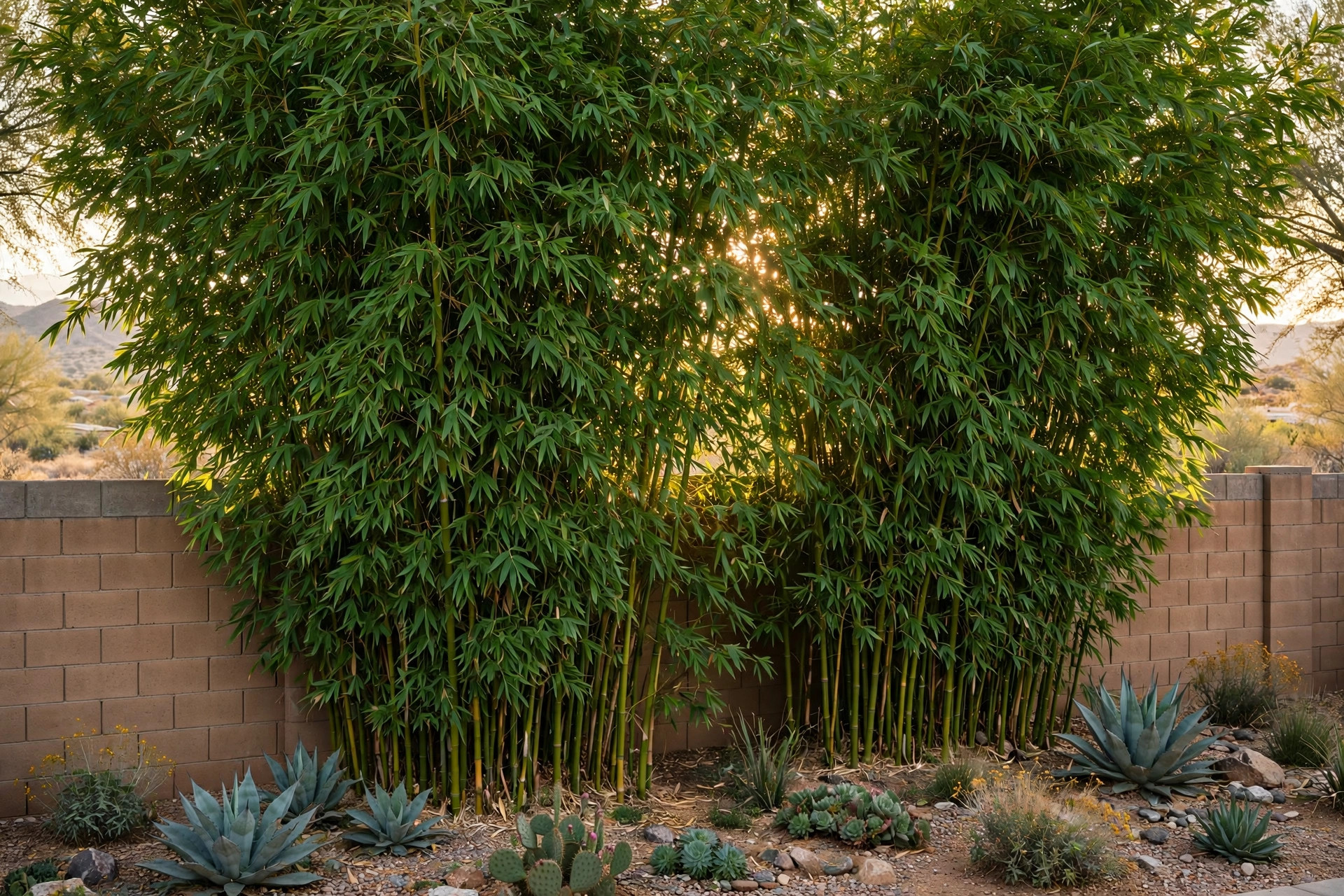
“Five planted as a hedge. Tough evergreen screening.”
Background
A broadleaf evergreen shrub in the barberry family (Berberidaceae), native to Japan, China, and India. The genus name is the Latinized form of the Japanese 'nanten' (southern sky); 'domestica' means cultivated. Despite the common name 'heavenly bamboo', it is not a bamboo. Long used in Asian gardens for good fortune. The UA arboretum notes it is endemic to China and Japan.
Distinguishing traits
Upright, cane-like stems 4-8 ft tall and 2-4 ft wide with lacy compound leaves that shift from green to gold, red, and orange in autumn/winter. Loose clusters of tiny white flowers in late spring followed by sprays of bright red berries that persist through winter. Suckering habit makes it a good hedge; berries are toxic to birds (linked to cedar waxwing deaths) and the species is invasive in the Southeast — the sterile dwarf cultivars are the safer choice. The UA arboretum describes nandina as an evergreen shrub to about 8 feet with bamboo-like stalks, deep-green pinnate leaves that redden in cold, and showy clusters of red berries in fall.
Desert care — zone 9b
- Chill hours
- n/a — ornamental
- Cold hardiness
- Hardy to USDA zone 6; completely unfazed by 9b winters.
- Heat tolerance
- Tough in extreme desert heat; established plants are very drought tolerant. Foliage may chlorose in alkaline soils — common in AZ — so watch leaf color and acidify/feed if yellowing.
- Water
- Low once established; deep occasional watering in summer keeps it dense. Avoid waterlogged spots. The UA arboretum rates water use as high, noting it is not drought tolerant and is sensitive to dry or salty soils.
- Soil
- Adaptable to most soils but prefers well-drained; amends help in heavy clay. Foliage can yellow in alkaline desert soils.
- Sun exposure
- Full sun to part shade; best color with several hours of sun. The UA arboretum recommends full sun to partial shade but cautions against over-exposure in very hot, sunny climates.