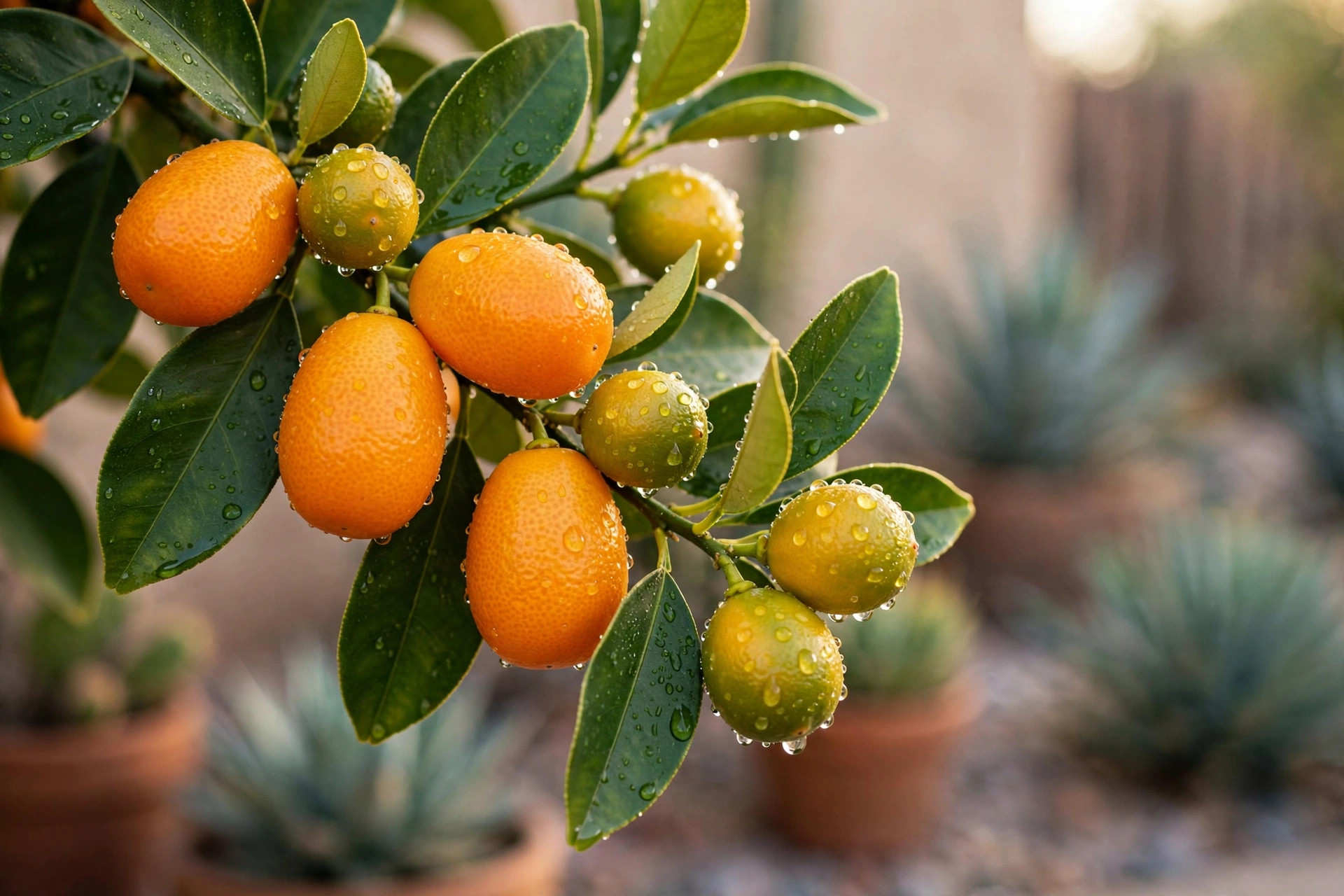
“Five mature trees, pre-existing — 'about 15 years old... great for juicing.'”
Background
'Arizona Sweet' is not a single registered cultivar: University of Arizona Cooperative Extension confirms 'Arizona Sweets' is a generic trade term for any of several sweet orange varieties adapted to the Salt River Valley (notably 'Diller', an Arizona-originated high-yielding juice orange; 'Hamlin', 'Marrs', 'Pineapple', and 'Trovita'). Local nurseries (e.g., Moon Valley) sell trees labeled 'Arizona Sweet Orange' as a proven low-desert selection. Individual tree identity therefore varies by nursery source. The UA arboretum traces sweet orange origins to Southeast Asia; it is now grown in tropical regions worldwide.
Distinguishing traits
Medium-sized oranges with bright orange flesh and rind; easy to peel; low to moderate seed count; good for both fresh eating and juicing. Exact fruit traits (size, seediness, season) depend on which underlying variety the label refers to — 'Diller' types are small-medium with few seeds and heavy yields. The UA arboretum describes the sweet orange as a broadleaf evergreen tree of 20-30 feet with white flower clusters and round sweet fruit.
Desert care — zone 9b
- Chill hours
- Low (~100 hours below 45°F).
- Cold hardiness
- ~28°F for mature trees; protect young trees below freezing. The UA arboretum calls it frost tender and advises planting for early-morning sun.
- Heat tolerance
- Well-proven in 115-120°F Salt River Valley summers with adequate irrigation; long-lived landscape trees in Queen Creek.
- Water
- Deep watering 1-2x/week summer (mature trees 2-3x/month in winter); established trees are fairly drought-tolerant but fruit quality needs consistent moisture.
- Soil
- Well-drained, pH 6.0-7.5; mature trees tolerate local soils; mulch mature root zones.
- Sun exposure
- Full sun.